

If you want to say no politely in English without making things awkward, you don’t need perfect sentences or complex grammar. What you need are a few simple patterns that help you sound clear, respectful, and confident. When you know how to say no politely in English, you can protect your time and feelings while keeping relationships comfortable and healthy.
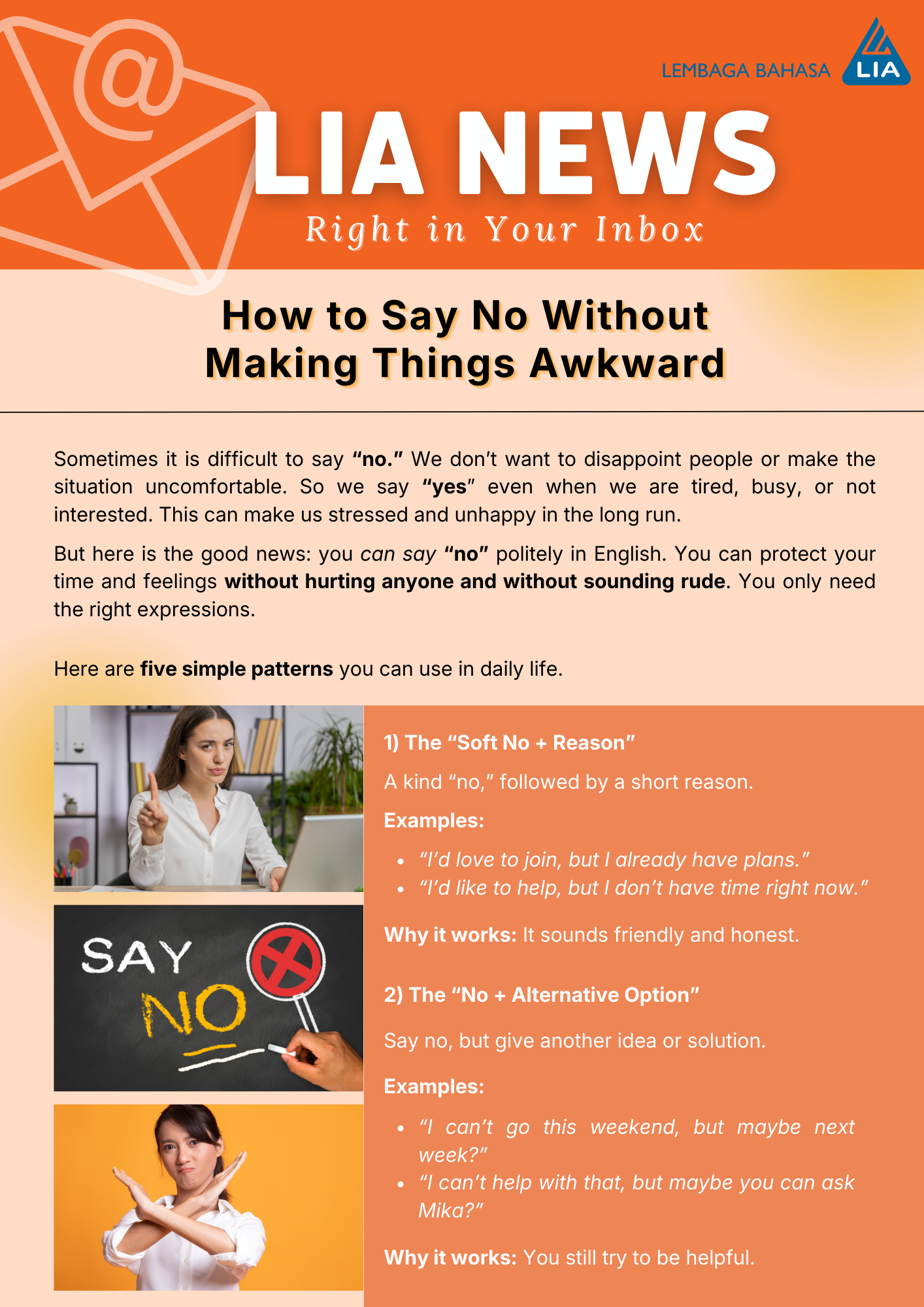
Many people say “yes” even when they want to say “no” because they are afraid of disappointing others or sounding rude. Over time, this habit can cause stress and frustration. Learning to say no politely in English allows you to be honest while still showing respect. A polite refusal keeps communication clear and helps others understand your boundaries without tension.
Polite refusal is an important part of effective communication. According to language experts, being clear and respectful when saying no helps maintain positive relationships. You can find similar examples of polite refusal and tone awareness in this guide from the British Council on polite language.
For many English learners, saying “no” feels too direct. Without the right expressions, a refusal may sound cold or uncomfortable. As a result, learners avoid saying no at all. The key is understanding that politeness in English often comes from tone and structure, not from avoiding the word “no” itself.
Instead of memorizing long sentences, it’s easier to learn a few reusable patterns. These patterns help you say no politely in English in different situations, such as invitations, requests, or offers. Once you practice them, responding becomes faster and more natural.
This pattern is useful when you want to sound friendly and honest. Start with a gentle refusal, then add a short reason. You don’t need to explain everything in detail. One clear reason is enough to communicate your message politely.
If you want to remain helpful, you can say no and offer another option. This shows that you respect the other person’s request, even though you cannot agree to it. This pattern works well in social and professional situations.

Starting with appreciation makes your refusal sound warmer. Thank the person for the invitation or offer, then clearly say no. This pattern is especially useful when you want to maintain a good relationship.
Sometimes you need time before answering. This pattern allows you to delay your response politely without committing too early. It is a safe option when you need to check your schedule or think carefully.
When someone keeps asking, a clear but polite boundary is necessary. This pattern helps you stay respectful while making your decision final. Being clear prevents repeated requests and awkward situations later.
Saying no does not make you unfriendly or selfish. It shows that you understand your limits. When you can say no politely in English, communication becomes more honest and balanced.
If you want more guided practice for everyday communication, General English for Adults can help you build confidence with real-life speaking situations—so you can express yourself naturally and politely.
Views: 4