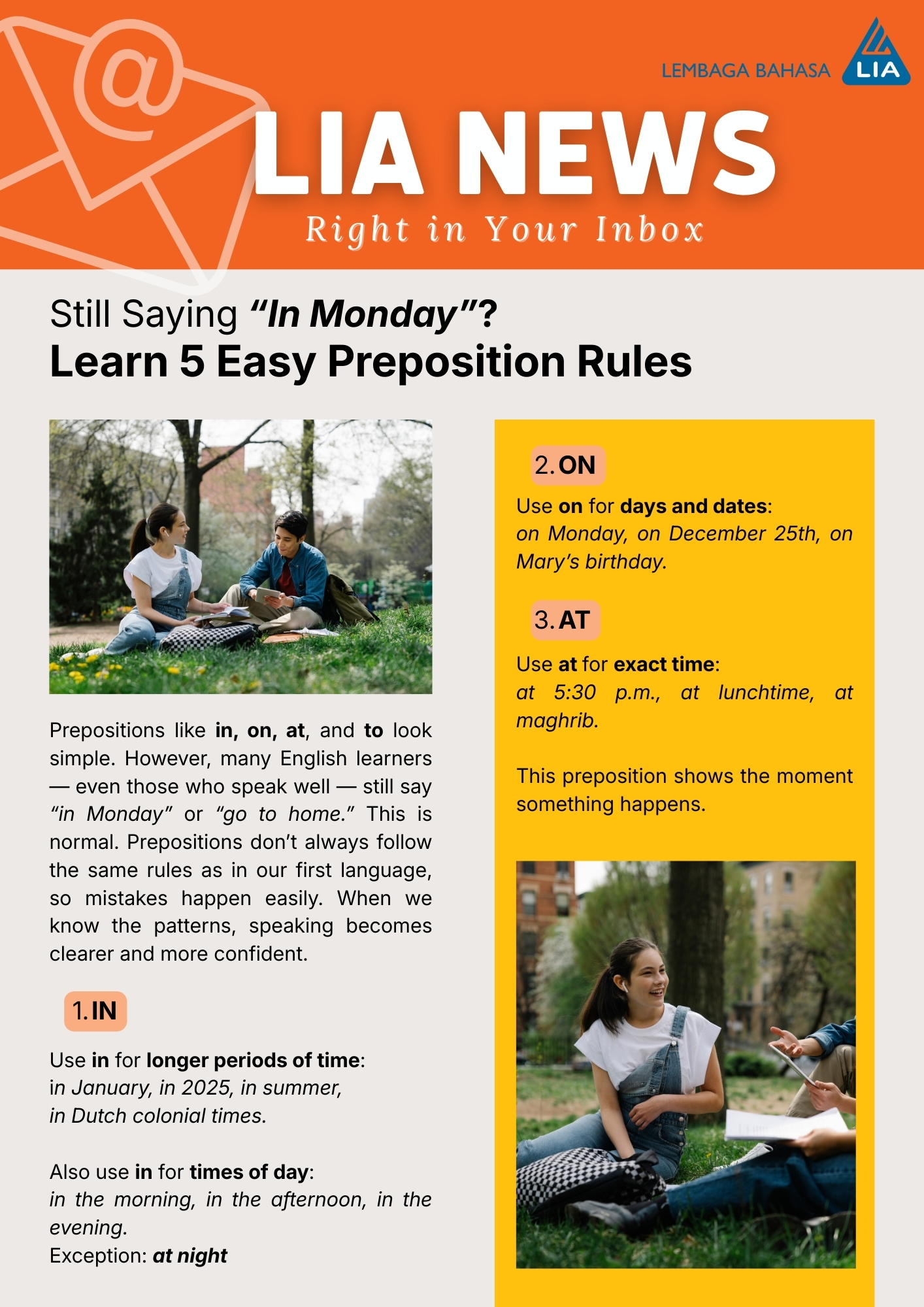
English Prepositions In, On, At: 5 Easy Rules to Stop Common Mistakes
English prepositions in, on, and at are small words that often cause big confusion for learners. Even advanced English speakers still say “in Monday” or “go to home” without realizing it. Understanding how English prepositions in on at work will help you speak more clearly, avoid common mistakes, and feel more confident in everyday conversations.
English Prepositions In, On, and At: Why They’re So Confusing
English prepositions in, on, and at look simple, but they don’t always follow logical patterns for learners. In many languages, one preposition can cover several meanings — but in English, small changes in time and context require different prepositions.
This is why mistakes like “in Monday” or “at summer” are very common. The good news is that once you understand the basic patterns behind English prepositions in on at, these errors become much easier to avoid.
How to Use English Prepositions In, On, and At Correctly
Instead of memorizing long grammar rules, it’s more effective to learn English prepositions in on at through clear usage patterns. Here are the most important ones you can apply immediately in daily conversations.
Use IN for Longer Periods of Time
Use in when you’re talking about longer or more general time frames.
Examples:
in January
in 2025
in the morning
in the afternoon
in summer
One common exception to remember is at night, not in the night (for daily use).
Use ON for Days and Dates
Use on when referring to specific days or dates. Examples:
on Monday
on Saturday
on December 25th
on my birthday
This is why “in Monday” is incorrect — English prepositions in on at follow different rules depending on time specificity.
Use AT for Exact Times
Use at when you’re talking about precise times or moments.
Examples:
at 5:30 p.m.
at lunchtime
at midnight
Think of at as pointing to a specific dot in time.
If you want to explore these patterns further, Cambridge Dictionary also provides clear explanations and examples of how English prepositions like in, on, and at are used in real contexts.
Common Preposition Mistakes English Learners Make
Even confident speakers still struggle with English prepositions in on at, especially when translating directly from their first language. Some mistakes happen because the rule feels logical — but English works differently.
How Practice Helps Prepositions Feel Natural
Understanding why English prepositions work a certain way makes a big difference. When learners see patterns — instead of isolated rules — speaking and writing become more automatic.
Regular exposure, short practice, and real examples help English prepositions in on at feel natural over time. You stop translating in your head and start choosing the right preposition instinctively.
Build Confidence with Guided English Practice
Learning grammar rules is helpful, but applying them in real situations is what builds confidence. With guided practice and regular feedback, learners can correct common preposition mistakes naturally while improving overall fluency.
If you prefer learning English step by step with practical guidance, joining our General English for Adults program can help you apply English prepositions in on at correctly in everyday communication.