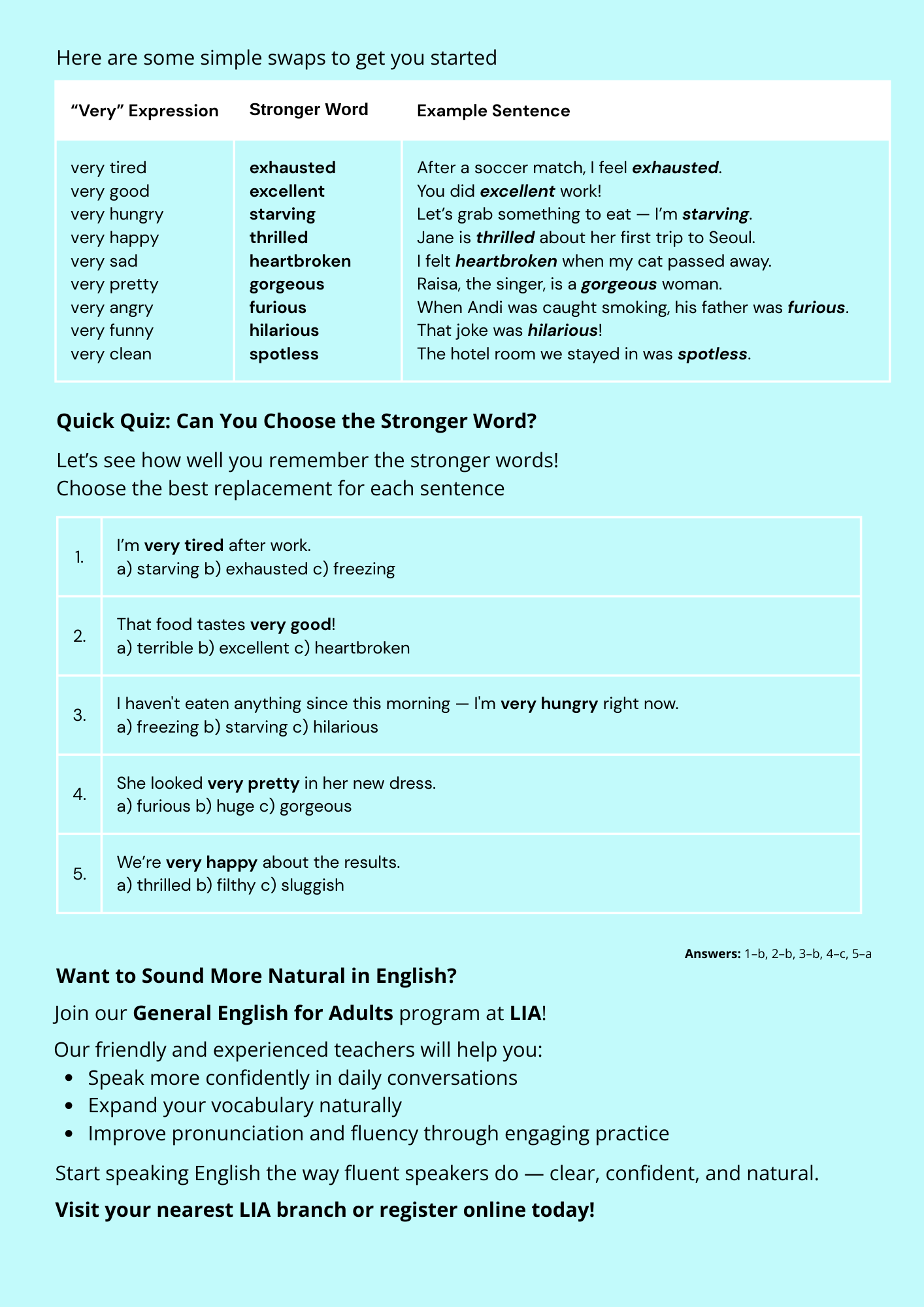
Words instead of very can make your English instantly clearer, more natural, and more powerful. Fluent speakers rarely say “very + adjective.” They choose a stronger single word: exhausted (not very tired), thrilled (not very happy), spotless (not very clean).
This guide gives you quick swaps, example sentences, and a 1-minute drill so you can stop overusing very and start sounding confident in real conversations.
Words Instead of Very — Quick Swaps & Examples
Why Words Instead of Very Sound More Natural
When you catch yourself about to say “very + adjective,” pause and choose words instead of very. Keep a tiny bank of favourites and practise them out loud for one minute a day. Here are reliable swaps you can use today:
very tired → exhausted
very hungry → starving
very happy → thrilled
very sad → heartbroken
very pretty → gorgeous
very angry → furious
very funny → hilarious
very clean → spotless
very cold → freezing
very big → enormous
Practice: Use Words Instead of Very in Daily Conversations
Pick five sentences you say often. Replace “very + adjective” with a stronger single word.
Read them aloud twice. Record yourself if you can.
Tomorrow, try the same ideas in a real chat or meeting.
Why this works. One precise adjective carries more meaning than “very + adjective,” so your message becomes shorter, clearer, and easier to process. As you keep choosing words instead of very, your vocabulary grows and your rhythm sounds more fluent.
Pro tip: Write a shortlist of words instead of very in your notes (e.g., exhausted, starving, furious, spotless, gorgeous, hilarious). Check it before calls or presentations until the habit sticks.